When Men Get Rich and Powerful, Women Pay the Price
Across centuries, cultures, and political systems, one pattern repeats with unsettling consistency: concentrated male power breeds sexual entitlement, violence, and control over women. Not sometimes. Not accidentally. Structurally.
OPINION
Lovey Chaudhary
2/7/20263 min read
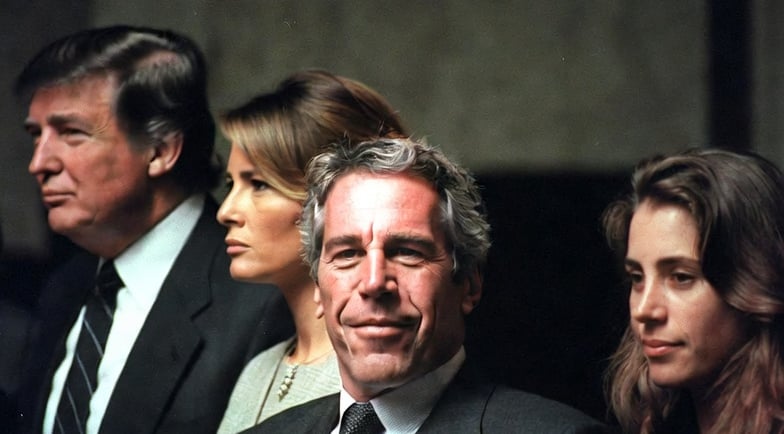
Every major power scandal tells the same story. Men sit at the table. Women do the work, take the risks, absorb the damage and disappear from the record. The Epstein files didn’t expose something new. They exposed how normal this has always been.
Let’s stop pretending we’re shocked.
Every time details come out about powerful men abusing women, the public acts stunned. As if this is new. As if this is rare. As if history hasn’t been screaming the same lesson for centuries.
When men become rich and powerful, women don’t become safer. They become invisible, disposable, and usable.
The Epstein files didn’t reveal a mysterious underground operation. They revealed something far more disturbing: how openly this world functioned.
Private planes. Famous names. Political connections. Social events. And women — everywhere — but never in power.
Women were everywhere. Just never in charge.
One of the clearest patterns in the Epstein files is this: women were present, but only as organizers, recruiters, assistants, schedulers, facilitators. They arranged travel. They managed logistics. They smoothed things over. They kept the machine running.
But they were never decision-makers.
They weren’t setting terms. They weren’t controlling money. They weren’t protected. And when things went wrong, they were the first to be blamed, erased, or quietly sacrificed.
This is not accidental. This is how male power structures operate.
Men hold the authority. Women handle the mess.
And when abuse happens, women are conveniently positioned close enough to take the fall — but far enough from power to stop it.
As one line from feminist history keeps proving true:
“Women are allowed proximity to power, not possession of it.”
The behavior was predictable because it always is
The men named or linked in these files weren’t acting randomly. They were acting entitled.
Power changes how people behave. Studies in psychology consistently show that people with high status and wealth are more likely to:
Objectify others
Ignore boundaries
Take risks they know won’t be punished
Now add patriarchy to that mix — a system that already teaches men that women’s bodies are available, negotiable, and secondary.
What you get isn’t an exception. You get a pattern.
Rich men didn’t suddenly “lose control.” They behaved exactly as systems had trained them to behave — with access, protection, and silence guaranteed.
And when consequences appeared? Lawyers arrived. Deals were cut. Narratives were managed.
Women, meanwhile, were left with trauma — and paperwork.
Why this keeps happening, everywhere
This isn’t about one island or one financier.
Look across history:
Kings with mistresses and concubines
Industrialists exploiting women workers
Hollywood producers abusing actresses
Tech founders protected despite allegations
Politicians shielded by party loyalty
Different industries. Same result.
Men in power are rarely held accountable because they are embedded in networks that benefit from their silence. Removing one man threatens too many institutions at once.
So instead, systems do what they always do: minimize, delay, distract.
As writer Susan Brownmiller once said,
“Rape is not a crime of passion. It is a crime of power.”
Why exposure doesn’t feel like justice
Here’s the part no one likes to say out loud.
Information keeps coming out. Names circulate. Documents surface. And yet — very little actually changes.
Most of the men involved continue to live wealthy, comfortable lives. Careers intact. Social circles untouched. Power largely preserved.
Meanwhile, the public is left consuming disturbing details with no resolution. Outrage spikes. Then exhaustion sets in.
For women especially, this cycle is brutal.
Being constantly reminded of how unsafe the world is — while watching abusers walk free — damages mental health. It creates fear without relief. Awareness without agency.
We are told that knowing is progress. But knowing without consequences starts to feel like punishment.
As one survivor famously said,
“Telling the truth didn’t set me free. It just showed me how protected they were.”
Why women are always written out at the end
History loves to remember powerful men as complicated, flawed geniuses. Women, if remembered at all, are footnotes. Assistants. Girlfriends. Mistakes.
Even in scandals built on women’s suffering, women are rarely centered as thinkers, whistleblowers, or agents of change. They are framed as props in men’s stories.
The Epstein files didn’t just expose abuse. They exposed how women are used to maintain systems that harm them, then erased once those systems are questioned.
And that’s the most honest lesson of all.
The uncomfortable truth
The people at the top, the richest, most connected men in the world, don’t live in the same reality as the rest of us.
They can wait out outrage. They can reshape narratives. They can afford silence.
The rest of us are left angry, overwhelmed, and powerless, scrolling through revelations that change nothing structurally, yet weigh heavily on our sense of safety and trust.
We get louder. We talk more. We share more.
But real power rarely shifts just because the truth is visible.
That doesn’t mean speaking out is useless. It means we should stop pretending exposure alone equals justice.
Because history is very clear on this point:
Men in unchecked power do not stop on their own.
And women are tired of being the evidence.
“The problem isn’t that the truth is coming out. It’s that the system was built to survive it.”